How Cultural Motifs Reshape Payline Formations in Mythology-Inspired Reels Versus Treasure-Themed Setups
Ellis Schmidt · Oct 2, 2026
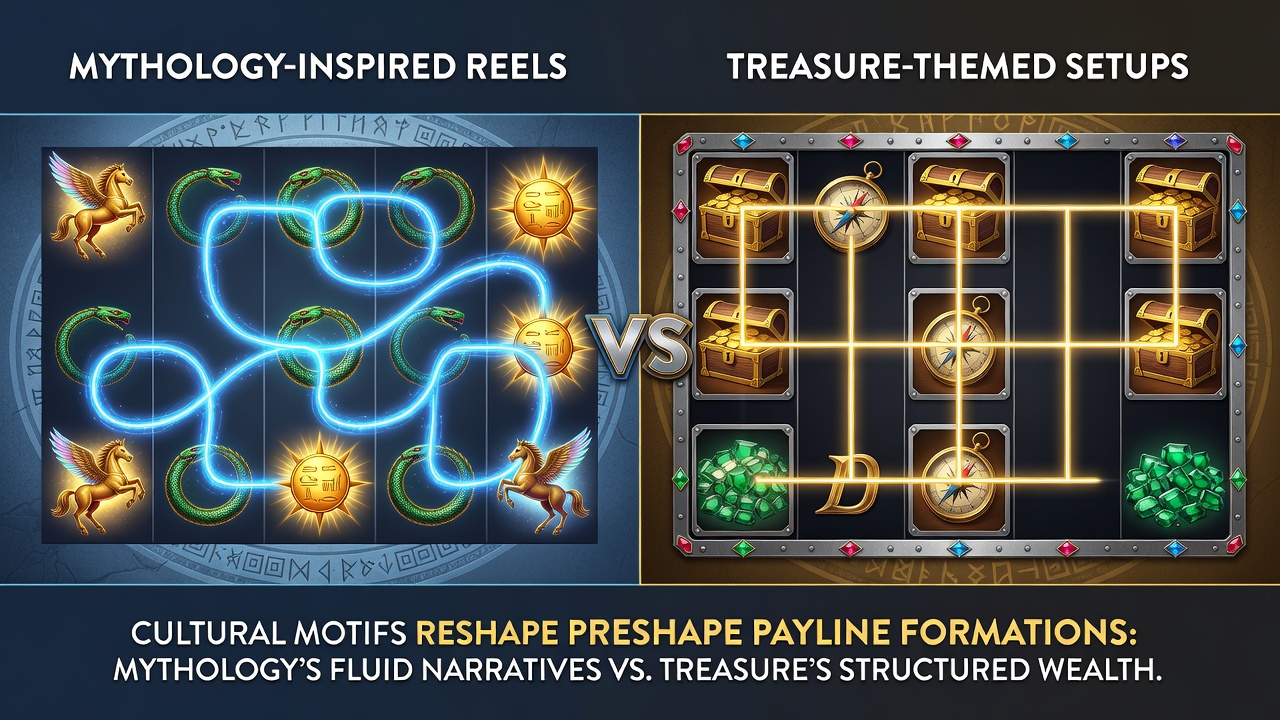
How Cultural Motifs Reshape Payline Formations in Mythology-Inspired Reels Versus Treasure-Themed Setups
Slot developers integrate cultural motifs directly into payline structures, and this integration creates distinct mechanical differences between mythology-inspired reels and treasure-themed setups, while data from industry reports shows that symbol hierarchies and directional flows adapt to thematic elements such as deities or hidden caches.
Egyptian mythology slots often feature horizontal and diagonal paylines that mirror the paths of gods across temple walls, whereas Norse-inspired designs incorporate vertical cascades alongside standard left-to-right lines because rune symbols require multi-axis connections for full activation. Treasure-themed games instead favor linear or path-following paylines that trace map routes or chest sequences, and these formations limit branching options compared with the layered intersections common in mythological reels.
Symbol Placement and Payline Geometry
Researchers at gaming design institutions have documented how Anubis or Odin figures occupy central reel positions to anchor extended paylines that span multiple rows, creating formations unavailable in treasure setups where gold coins and keys serve as connectors along fixed routes. In mythology titles, wild symbols expand paylines into irregular patterns because cultural narratives demand flexible deity interactions, yet treasure games restrict wild placements to maintain straight-line treasure trails that players follow sequentially.
October 2026 updates to several popular titles introduced hybrid payline systems in mythology slots, and these changes allow Greek god symbols to trigger both standard lines and cluster formations simultaneously while treasure games retained rigid path-based structures tied to pirate or explorer motifs. Observers note that such adjustments stem from cultural requirements for divine multiplicity versus singular quest progression in treasure themes.
Comparative Mechanics Across Themes
Payline counts differ markedly, with mythology reels averaging between 20 and 243 active lines due to stacked deity symbols that enable overlapping wins, whereas treasure setups typically operate with 10 to 50 lines focused on sequential collection mechanics. Data indicates that this variance arises because mythological motifs incorporate cyclical time elements like eternal battles or cosmic events that justify denser line networks, but treasure themes emphasize linear discovery arcs that favor fewer directional options.
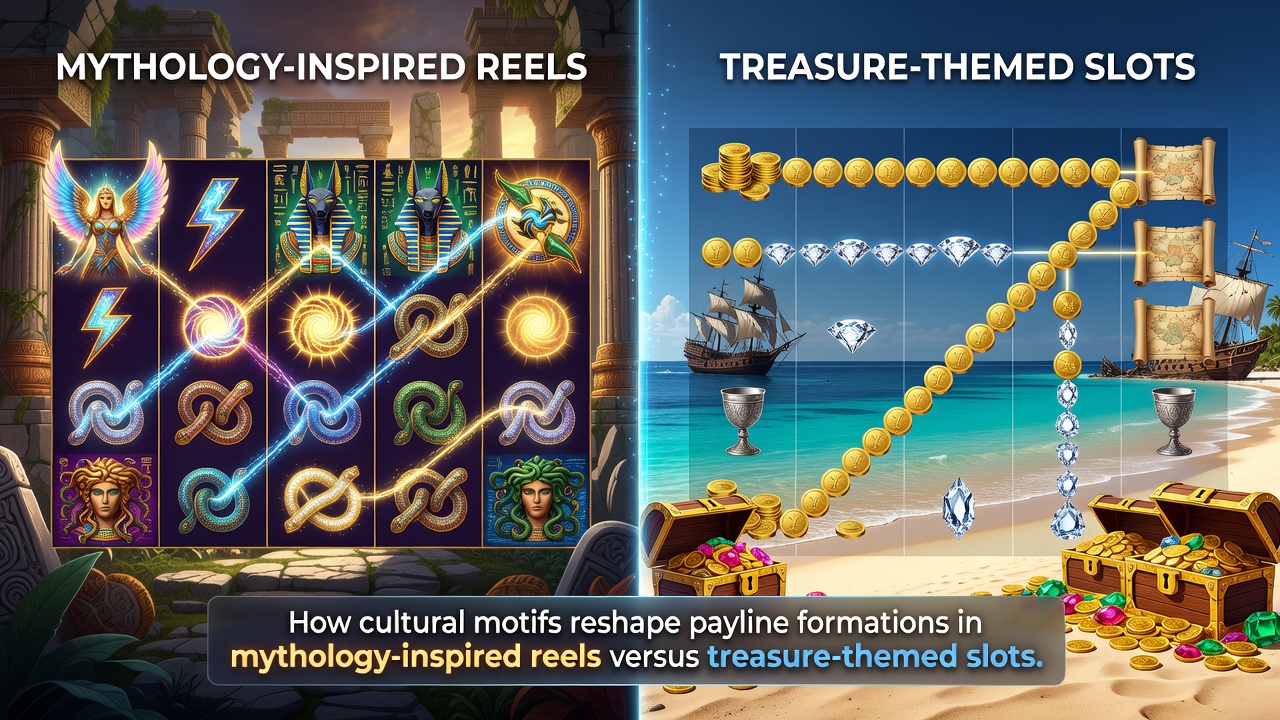
One developer case study revealed that incorporating Celtic knot motifs into reel layouts produced self-intersecting paylines, and these intersections increased symbol adjacency rates beyond those found in treasure games where map fragments align only along predetermined paths. European Gaming and Betting Association reports confirm that such motif-driven geometry influences return-to-player calculations through altered hit frequencies without changing overall volatility profiles.
Regional Regulatory Influences on Design
Regulatory bodies in multiple jurisdictions examine payline formations for fairness, and authorities in Nevada along with those in Australia require documentation showing how cultural symbols affect combination probabilities. Mythology slots undergo additional scrutiny when deity icons create non-standard lines, whereas treasure setups receive review primarily for their sequential trigger consistency. These reviews ensure motif integration does not compromise random outcomes across both categories.
Industry organizations track how payline adaptations evolve, and figures from academic gaming studies demonstrate that mythology designs incorporate more all-ways or Megaways variants to accommodate pantheon interactions while treasure titles stick with classic configurations augmented by occasional map-based bonuses.
Conclusion
Cultural motifs continue to dictate specific payline architectures in mythology versus treasure slots, and ongoing releases through late 2026 maintain these distinctions through symbol-driven geometry and directional rules. Developers apply these principles consistently across new titles, resulting in measurable differences in reel behavior that reflect thematic origins rather than arbitrary choices.