Mapping Multiplier Cascades Through Megaways Structures in Fruit Shop Megaways Versus Bonus Trigger Chains in Big Bass Bonanza and Book of Dead
Ellis Schmidt · Aug 24, 2026
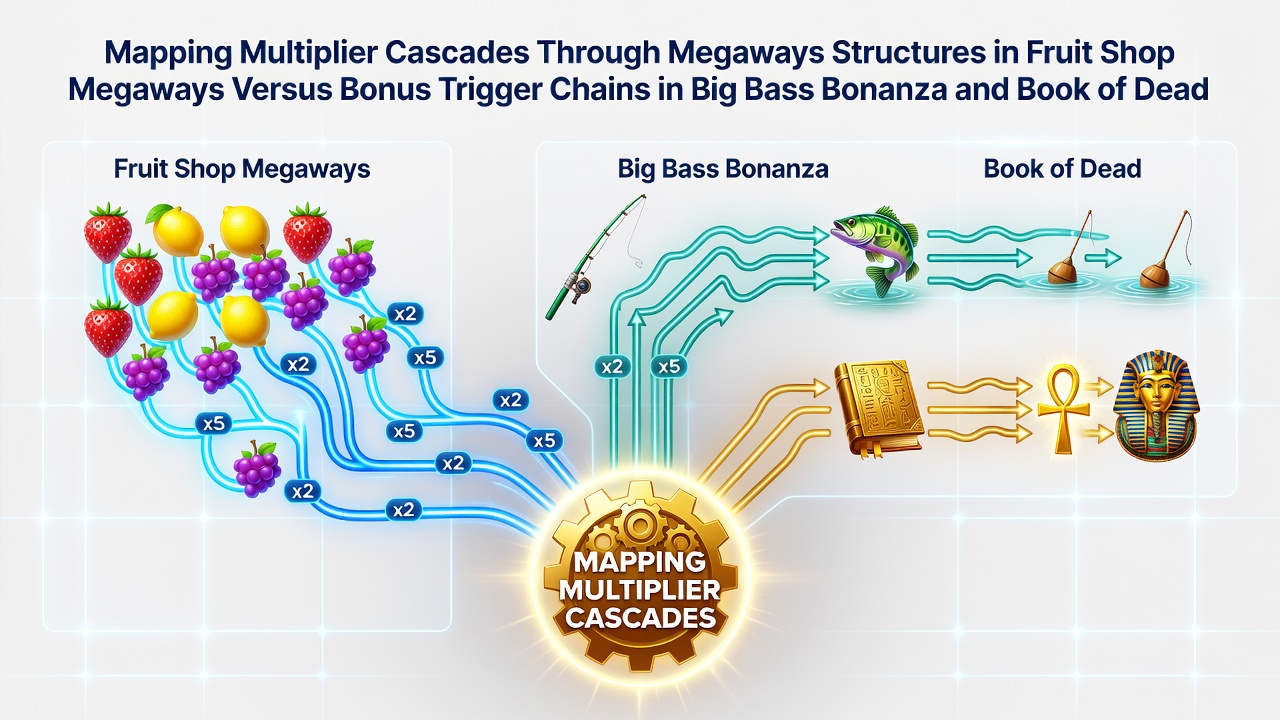
Mapping Multiplier Cascades Through Megaways Structures in Fruit Shop Megaways Versus Bonus Trigger Chains in Big Bass Bonanza and Book of Dead
Slot mechanics have evolved significantly over recent years and Fruit Shop Megaways stands out because its Megaways structure creates up to 117,649 ways to win through variable reel heights while cascading symbols trigger successive wins on the same spin. Observers note that each cascade can apply increasing multipliers which build from base levels and reach higher values when consecutive drops occur without interruption. Data from industry reports indicates these multiplier progressions follow specific patterns tied to the number of cascades achieved in a single sequence.
Core Features of Megaways Cascades in Fruit Shop Megaways
Fruit Shop Megaways operates with cascading reels where winning combinations disappear and new symbols fall into place to form fresh combinations and this process continues until no further wins appear. Researchers have documented that multipliers begin at x1 and increment with every cascade while special fruit symbols can enhance the multiplier value beyond standard increments. Those who have examined the paytable and game rules find that free spins introduce additional multipliers that stack on top of the cascade chain and this layering produces the potential for extended win sequences. In August 2026 regulatory filings from the Nevada Gaming Control Board highlighted ongoing analysis of how variable reel configurations influence cascade frequency across Megaways titles.
Bonus Trigger Mechanisms in Big Bass Bonanza
Big Bass Bonanza relies on scatter symbols to activate a free spin bonus round where fishermen collect fish symbols carrying cash values and the number of fishermen determines multiplier levels applied to collected amounts. Studies from the Canadian Gaming Association show that bonus trigger chains depend on landing three or more scatters with retrigger opportunities arising when additional fishermen appear during the round. The structure creates a chain reaction because each retrigger extends the sequence and increases the chance for higher multiplier tiers to activate on subsequent spins. Players encounter these chains through a dedicated collection meter that fills progressively and this design separates the base game from the bonus phase in a clear sequence.
Comparing Trigger Chains in Book of Dead
Book of Dead features a book symbol that serves dual purposes as both wild and scatter and three or more books initiate ten free spins with a special expanding symbol chosen at random before the round begins. Figures from the Australian Communications and Media Authority reveal that retrigger chains in this title occur when additional book symbols land during free spins and each retrigger adds five more spins while the chosen expanding symbol remains constant. Unlike cascade systems the bonus here builds through repeated activations rather than symbol drops and this creates a different rhythm where the focus stays on symbol expansion across all reels during the triggered spins.
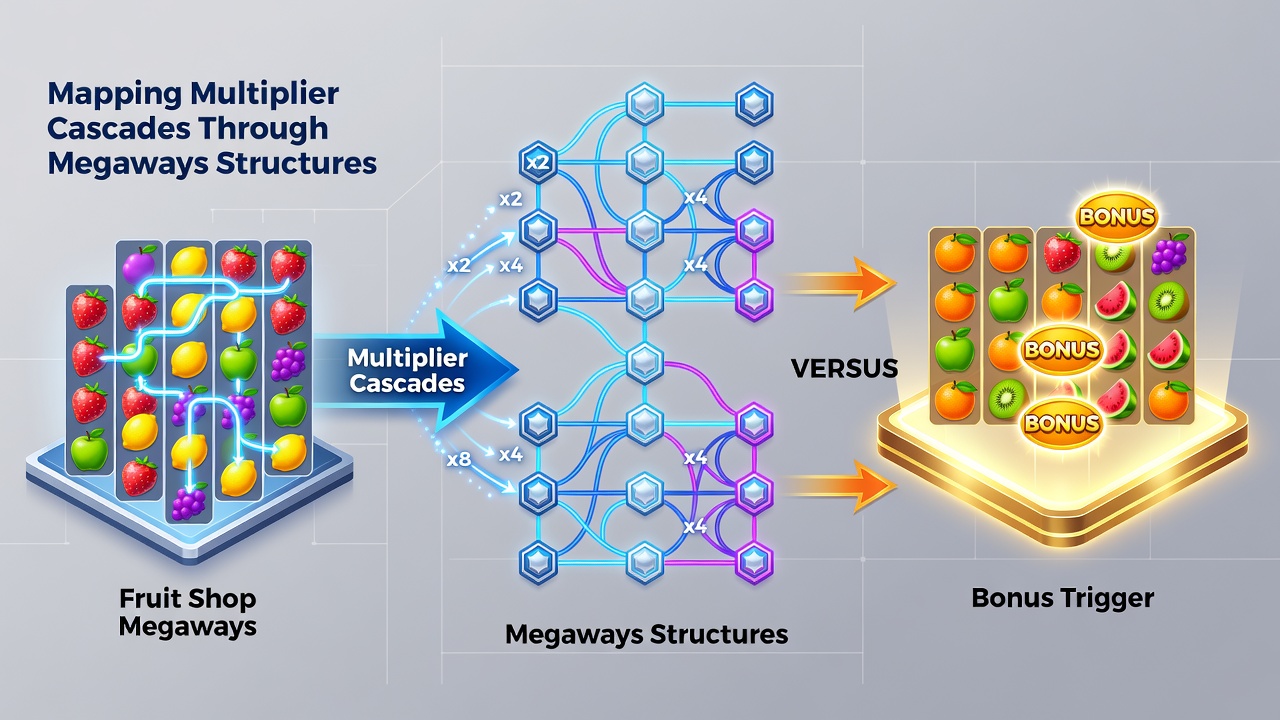
What's interesting is how the two approaches diverge in pacing because Fruit Shop Megaways delivers rapid successive wins through cascades while the bonus games in Big Bass Bonanza and Book of Dead extend play through collected symbols or expanding mechanics. Evidence suggests that the Megaways model distributes multipliers across many small wins whereas the chain-based bonuses concentrate value in fewer but potentially larger outcomes during the free spin phase.
Structural Differences and Player Pathways
Analysts at the European Gaming and Betting Association have examined how these designs affect session length and note that cascade systems encourage continuous engagement within a single spin sequence whereas trigger chains separate base play from bonus rounds with distinct activation requirements. The mapping of multiplier paths in Fruit Shop Megaways shows a linear progression tied directly to cascade count while Big Bass Bonanza and Book of Dead rely on symbol collection or expansion to build value over multiple spins. Observers point out that both styles maintain return-to-player percentages within regulatory ranges yet achieve those figures through contrasting volatility profiles and this distinction becomes apparent when examining long-term play data.
Conclusion
The contrast between multiplier cascades in Megaways structures and bonus trigger chains in the other two titles illustrates two distinct methods for delivering feature-driven gameplay. Data indicates that each approach maintains its own internal logic for building wins and extending sessions while remaining compliant with oversight from bodies such as the Nevada Gaming Control Board and the Australian Communications and Media Authority. Those who study these mechanics find clear patterns in how cascades accumulate multipliers versus how chains extend through retriggers and these patterns continue to shape game design choices across the sector.